
SmartGraft Hair Restoration
SmartGraft is a minimally invasive FUE hair transplant performed in our office. Healthy follicles are harvested one by one from the back and sides of your scalp, kept viable in a temperature-controlled chamber, and implanted where hair is thinning. No strip incision, no stitches, no linear scar, and the transplanted hair is permanent.

What isSmartGraft?
SmartGraft is an FDA-cleared follicular unit extraction (FUE) system. Instead of cutting a strip of scalp, a specialized handheld device harvests individual healthy follicles from your donor area, the back and sides of the scalp where hair is genetically resistant to loss. Each graft is stored in a temperature-controlled chamber to keep it viable until it is implanted.
Tiny recipient sites are then created in the thinning areas and the grafts are placed at precise angles and depths, matching the direction and density of your natural growth. Because the follicles are placed one by one, the result is a hairline designed for your face, not a transplanted look. Once healed, it is virtually undetectable.
The transplanted follicles keep their resistance to hair loss in their new location, so the result is permanent. New hair can be cut, styled, and treated exactly like the hair it grows in beside.
Who is SmartGraft for?
SmartGraft is for men and women who want their own hair back, permanently.
Every SmartGraft case starts with a consultation. Your provider evaluates your hair loss pattern, scalp health, and donor area strength, maps a hairline for your facial structure, and sets a graft count, typically 1,000 to 2,500 or more, for your case.
Your hairline is receding
Frontal recession and thinning temples are the classic SmartGraft cases, for men and women alike.
Your crown is thinning
Crown coverage responds well; it usually calls for a higher graft count, planned at consultation.
Your part keeps widening
Women with a widening part or thinning temples can rebuild density, provided donor hair is adequate.
You have healthy donor hair
Enough hair at the back and sides of the scalp is the core requirement; candidates should also be in good general health, with a stable hair loss pattern and realistic expectations.
You want a permanent answer
Transplanted follicles are resistant to the hormone that drives pattern loss, so the new growth is yours for good.
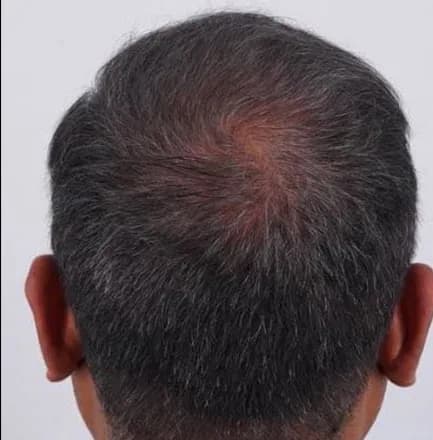
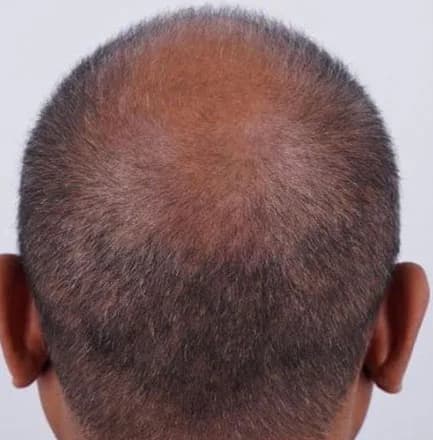
SmartGraft, crown density1 / 3
What SmartGraftcan do.
These before and after photographs show the kind of hairline and crown restoration SmartGraft is designed for, from the treatment gallery on the practice's previous website. Drag the handle to compare.
See all SmartGraft Hair Restoration resultsIndividual results vary. These photographs are from the treatment gallery on the practice's previous website and are not a guarantee of your own outcome.
SmartGraft on video
These videos answer the questions patients ask most about SmartGraft, from how long hair restoration results last to why travelling abroad for a transplant is rarely worth it.
A consultation is the best way to find out what a session for your hair would involve.
Whatto expect.
Book a consultationSmartGraft is priced by graft count, which is set at your consultation based on the area to be covered and your density goals.
A single in-office session under local anesthesia. Most cases take four to eight hours depending on graft count; very large cases can take a full day.
Mild redness or swelling in the donor and recipient areas settles within a few days. Most patients return to normal activities in a few days and hold off on strenuous exercise for about a week.
Some transplanted hairs shed in the first weeks, which is normal. New growth starts around three to four months, looks noticeably fuller by six, and reaches its full result around twelve months.
Frequently asked questions
How long does a SmartGraft procedure take?
Most sessions take four to eight hours depending on how many grafts are placed. Larger cases can take a full day. It is a single session, done in our office.
Does SmartGraft hurt?
The procedure is performed under local anesthesia, so discomfort during treatment is minimal. Most patients find the recovery surprisingly easy as well.
How many grafts will I need?
Graft counts typically range from about 1,000 to 2,500 or more. Your consultation determines the ideal number, based on the area to cover and your density goals.
When will I see results?
New growth begins around three to four months after treatment, improvement is noticeable by six months, and the full result comes in around twelve months.
Are the results permanent?
Yes. Donor follicles come from areas genetically resistant to hair loss and keep that resistance where they are placed, so the transplanted hair is permanent.
Will it look natural?
Follicles are placed one by one at the angle, direction, and density of your natural growth, along a hairline designed for your facial structure. Once healed, the result is virtually undetectable.
Will I have a scar?
No linear scar. SmartGraft harvests follicles individually through tiny extraction points that heal quickly and become invisible once the surrounding hair grows back.
How is SmartGraft different from a traditional transplant?
Traditional strip transplants remove a band of scalp, which requires stitches and leaves a linear scar. SmartGraft is FUE: follicles are extracted individually, so there is no strip, no stitches, and a faster recovery.
What is the downtime?
Most patients are back to work and normal activities within a few days. Redness and swelling fade over a few days, and strenuous exercise waits about a week.
Can SmartGraft treat crown thinning?
Yes. The crown is a common treatment area; it generally needs a higher graft count than the hairline, which is factored into your plan.
Does SmartGraft work for women?
Yes. Women with a widening part, thinning temples, or frontal recession are candidates as long as there is adequate donor hair at the back and sides of the scalp.
Will I keep losing my other hair?
Transplanted hair is permanent, but native hair can continue to thin over time. Maintenance treatments or additional grafting sessions can be discussed at your consultation to protect the hair around your grafts.
Where to next
Related treatment
Exosomes for Hair Restoration
Growth-factor signaling therapy for thinning hair. No exosome product is FDA approved.
Explore the treatmentRelated concern
Thinning Hair & Hair Loss
A widening part or receding hairline
Start from the concernWorth reading
Should You Choose SmartGraft or Stick with Topical Hair Loss Treatments?
Tired of topical hair loss treatments that don’t deliver? Learn how SmartGraft offers permanent hair restoration for lasting results.
Read the answerAsk about hair restoration.
Tell us how long you have noticed thinning and what you have tried. We will come back with realistic options, from in-office treatments to SmartGraft.
Your details go straight to our Montgomery Road front desk and are never shared. A team member replies during office hours, usually the same day.

Ready when you are.
Book a consultation at our Montgomery Road office, or call and we will help you decide where to start.
Medically reviewed by Shalini Gupta, MD, Harvard-trained dermatologist and founder of The Dermatology, Laser & Vein Center. Last reviewed September 2026. This page is for education and is not a substitute for a personalized medical consultation.