
Emsculpt NEO for Knee Pain
Strengthens the muscles that stabilise the knee.
Non-invasive options that strengthen the muscle supporting a joint or break down the tissue causing heel pain, without injections or surgery.
One of the leading causes of knee pain is weak muscles around the knee joint. The quadriceps, hamstrings, and calf muscles are meant to absorb and control the force that passes through the joint every time you take a stair or stand up from a chair. When those muscles are weak or deconditioned, more strain arrives at the knee joint, and pain follows.
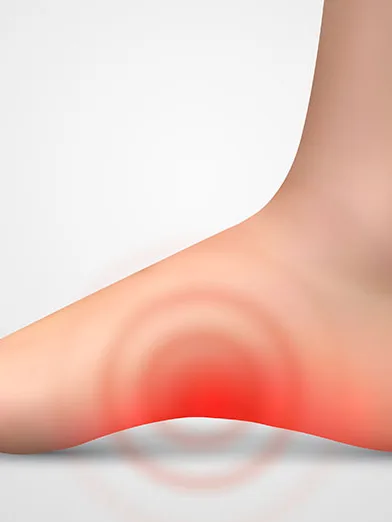
Plantar fasciitis is a tissue problem at a single point. The plantar fascia runs from the heel bone to the base of the toes, and repetitive stress, improper footwear, and activities that strain the foot inflame the fascia where it anchors at the heel. Over time the condition leads to scar tissue forming in the fascia, which is why it drags on rather than settling quickly. That is also why the first steps in the morning are the worst ones, and why, left untreated, it can lead to chronic pain, mobility issues, and a reduced quality of life.
Both problems are mechanical, and that shapes what is worth doing about them. The two treatments here work on the muscle that protects the joint and on the damaged tissue itself. They are non-invasive adjuncts that belong alongside physical therapy, orthotics, and stretching rather than in place of any of it. Before starting either one, it is essential to consult a healthcare professional to determine whether it is the right option for your specific condition.
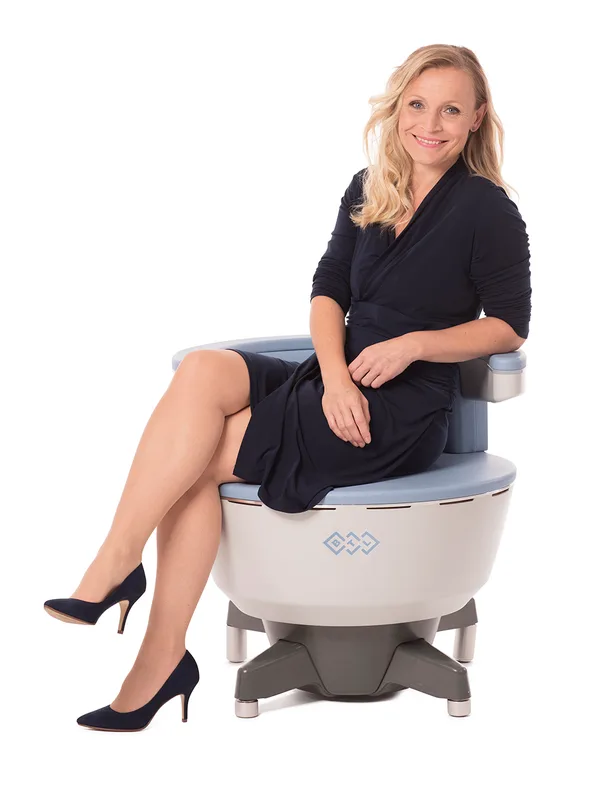
Emsculpt NEO for Knee Pain works on the muscles rather than on the joint. Focused electromagnetic energy triggers contractions deeper and more complete than you can produce voluntarily, combined with radiofrequency that warms the tissue first, and it targets the quadriceps and the surrounding musculature that stabilizes the knee. The intent is straightforward: stronger muscles distribute load more evenly across the knee and reduce the strain the joint carries.
You rest comfortably while the device does the work, it takes well under an hour, it involves no needles and no downtime, and it is delivered as a course of sessions across a few weeks. Strength keeps developing for some weeks after the course ends, the way it does after any training stimulus. What it does not do is treat the joint itself, and any description of it that implies otherwise is overstating the case.
Z Wave for Plantar Fasciitis addresses the tissue directly. Acoustic pressure waves are delivered through the skin at the heel, and that mechanical stimulus does two things: it breaks up the disorganized fibrous tissue that has built up at the fascial attachment, and it provokes a local increase in blood flow and repair activity in the fascia. Sessions run about 15 to 20 minutes, there are no incisions and no stitches, patients describe only a slight tingling sensation during the treatment, and there is no lengthy recovery period afterward.
Set side by side, one adds capacity and the other remodels a damaged structure. Emsculpt NEO for Knee Pain changes what the muscles around the joint can absorb. Z Wave for Plantar Fasciitis changes the state of the tissue at a specific point of failure. Neither involves an injection or an incision, which is the main argument for trying them before more invasive routes in the right person.
Emsculpt NEO for Knee Pain suits a wide range of people, from athletes recovering from injuries to older adults with age related knee issues, particularly where the thigh has visibly lost condition after an injury, an operation, or a long inactive period. It is a way into strengthening for people who cannot yet tolerate loaded exercise, and it works best combined with physical therapy rather than as a substitute for it. It is not appropriate for anyone with metal implants or an implanted electronic device in the treatment area.
Z Wave for Plantar Fasciitis earns its place in stubborn cases. Physical therapy, orthotics, stretching, and supportive footwear can provide relief, and they are the reasonable first step. Heel pain that persists or keeps returning despite all of that is the situation shockwave treatment is meant for, and most patients experience significant improvement after a few sessions.
Neither treatment replaces the basics. If the knee is loaded by body weight, or if the heel is loaded by repetitive stress, improper footwear, and activities that strain the foot, then the cause keeps running while the treatment does. Fixing the input matters more than the device, and the results worth having come when both happen together.
A consultation looks at how the pain behaves, what you have already tried, your medical history, and whether either treatment is the right choice for you. If it is not, the responsible answer is to consult a healthcare professional about your specific condition rather than start a course of sessions. All of this is general information and not a substitute for examination and diagnosis.
Listed in the order we most often recommend them, with a line on when each is the right pick.
Your consultation decides which actually fits your anatomy, your goals, and the downtime you can spare.
Tell us what brings you in and we will come back with next steps. Consultations are unhurried, and there is never pressure to book a treatment.
Your details go straight to our Montgomery Road front desk and are never shared. A team member replies during office hours, usually the same day.

Book a consultation at our Montgomery Road office, or call and we will help you decide where to start.
Medically reviewed by Shalini Gupta, MD, Harvard-trained dermatologist and founder of The Dermatology, Laser & Vein Center. Last reviewed September 2026. This page is for education and is not a substitute for a personalized medical consultation.