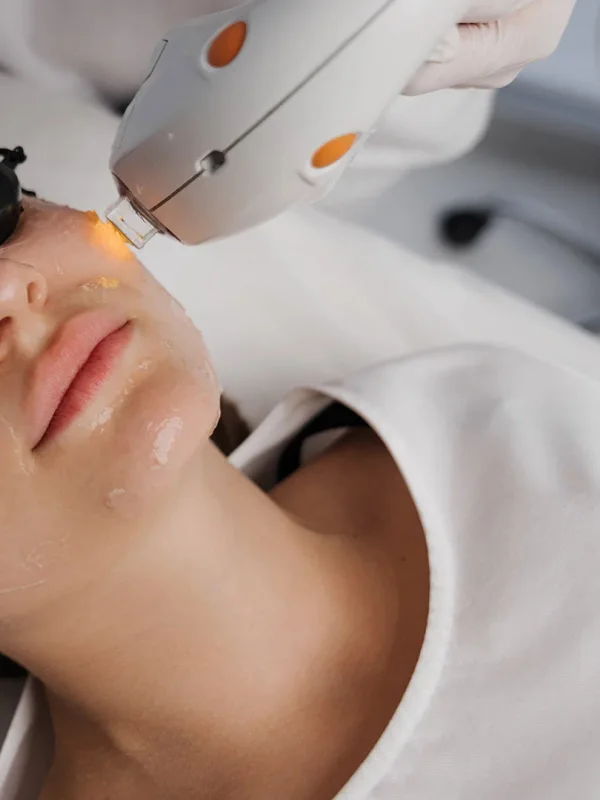
BBL (BroadBand Light)
Clears diffuse redness and background flushing across the face.

Facial redness usually comes from dilated blood vessels sitting close to the surface. Light treatments collapse those vessels so the flush has nowhere to show.
Facial redness is a plumbing problem more than a skin problem. The color comes from blood vessels just beneath the surface of the skin that have dilated and stayed that way, sitting close enough that you see them straight through the skin. Rosacea brings both, skin flushing that comes and goes and a persistent redness that stays put across the cheeks, nose, chin, and forehead.
Two things are worth separating before you treat any of it. The first is diffuse redness, a general background flush across the cheeks, nose, and chin with no single vessel you can point to. The second is discrete vessels, the fine red threads that are individually visible beside the nostrils and along the cheeks. They come from the same process, but they call for different devices and different settings, so a treatment aimed at one will underperform on the other.
The third element is inflammation. Rosacea is a chronic inflammatory condition, and in many people it produces bumps and pustules alongside the color, which look like acne but are not. Vessel-targeted light treatments address the color. They do not cure the condition, which is why the honest goal here is control rather than a permanent fix.
BBL (BroadBand Light) is the workhorse for diffuse redness. It delivers filtered light that hemoglobin absorbs preferentially, heating the vessel wall until the vessel collapses and your body reabsorbs it over the following weeks. Because it applies broad-spectrum light across a treated area rather than working one vessel at a time, it is what evens out the general flush across a whole cheek. Plan on a series rather than one visit, and expect to look distinctly flushed for a day or two afterward while the treated vessels resolve.
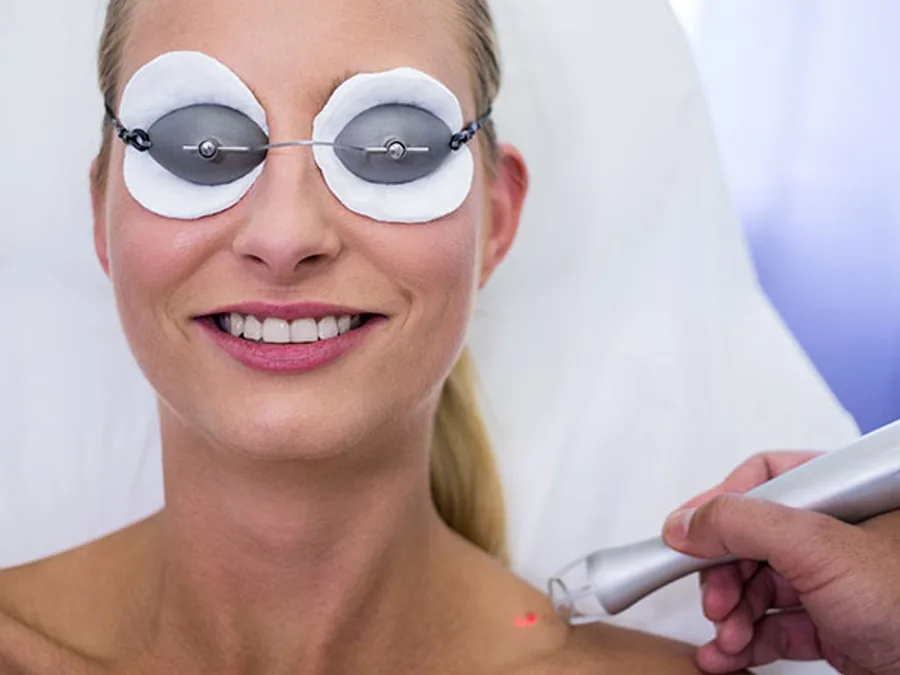
Laser Vein Removal (YAG) works one vessel at a time. Its longer wavelength reaches deeper and is absorbed strongly by the blood inside a specific vessel, sealing it shut, which makes it the right tool for the visible red lines around the nose that broad light tends to leave behind. It is precise and quick, with the laser applied in short pulses to the targeted vessels, and a session typically runs 15 to 30 minutes depending on how many veins are being treated. Plenty of people end up having both: broad light for the background color, YAG for whatever individual vessels are still visible against calmer skin.
GentleWaves is the outlier, because it uses no heat at all. It is low-level LED light that acts on the cell rather than the vessel, calming inflammatory signaling and supporting normal repair. It will not clear a vessel, and it should not be sold to you as though it will. What it does is settle reactive skin, which makes it genuinely useful for people whose rosacea flares at the slightest provocation, and as a way to quiet things down after a light treatment.
The practical difference between the three comes down to what each one targets: hemoglobin spread across an area, hemoglobin inside one identifiable vessel, or the inflammatory activity surrounding both. That is essentially the whole decision.
If your complaint is that your whole face reads pink in photographs, start with BBL (BroadBand Light) and expect a short series spaced a few weeks apart. If your complaint is one or two red threads you can trace with a fingertip, a session of Laser Vein Removal (YAG) is a far smaller commitment and often settles it outright. Most faces are a mix of both, so it is normal to treat the background first and then come back for the individual vessels that stand out once the surrounding redness has gone.
Nothing here stops your body from making new vessels. Rosacea is a condition you manage rather than one you finish, so with good skincare and maintenance visits results tend to hold for months to years, and most people come back periodically for a touch-up rather than finishing outright. The people who get the most out of these treatments are the ones who protect the result afterward with daily sunscreen and some attention to their own triggers, because sun exposure is both a common trigger for flare-ups and one of the reasons new vessels appear over time.
If your rosacea shows up mainly as bumps and pustules rather than color, it is worth knowing that light is not the only option. That form also responds to the topical treatments we offer, which can lessen the severity and frequency of rosacea breakouts.
A consultation is mostly a matter of looking closely at what your redness is actually made of, then checking the practical constraints. Recent sun exposure or a tan changes which settings are safe. Some medications make skin more light-sensitive. Deeper skin tones need a different approach than broad light, and that is a conversation to have before booking rather than after.
Listed in the order we most often recommend them, with a line on when each is the right pick.
Your consultation decides which actually fits your anatomy, your goals, and the downtime you can spare.
Worth reading
Visible facial veins can be frustrating and difficult to conceal. Whether they appear around the nose, cheeks, or under the eyes, these small red, blue, or
Read the answerWorth reading
IPL therapy treats sun damage, age spots, redness, rosacea and acne with light energy. Learn how sessions are customized for skin tone, clarity and texture.
Read the answerRelated concern
Motion lines and creases that stay put
Start from the concernTell us what you would like to change and we will come back with the treatments that fit, honest expectations, and a time to talk it through.
Your details go straight to our Montgomery Road front desk and are never shared. A team member replies during office hours, usually the same day.
Book a consultation at our Montgomery Road office, or call and we will help you decide where to start.
Medically reviewed by Shalini Gupta, MD, Harvard-trained dermatologist and founder of The Dermatology, Laser & Vein Center. Last reviewed September 2026. This page is for education and is not a substitute for a personalized medical consultation.