Sclerotherapy
The gold standard for spider and small varicose veins in the legs.

Visible veins are treated by closing them so blood reroutes through healthy vessels. Whether you get an injection or a laser depends mostly on the vein's size and where it sits.
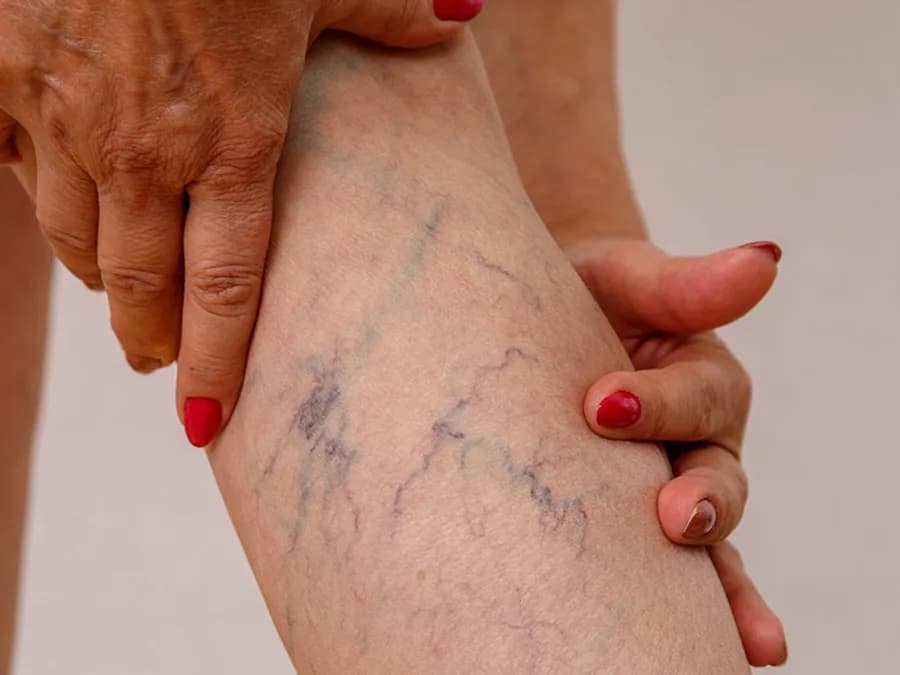
Leg veins move blood upward against gravity using a series of one-way valves. When those valves stop closing properly, blood slides backward and pools, pressure builds in the vessel below, and the vein stretches. At the surface that shows up as fine red or purple threads. Deeper, it shows up as the raised blue cords people call varicose veins. The vein you can see is no longer doing useful work, which is why closing it does not harm your circulation. The leg has many parallel routes, and the blood simply reroutes through healthy ones.
Facial vessels are a different story with a similar appearance. The fine red lines across the nose and cheeks are dilated capillaries, usually from years of sun exposure, from rosacea, or from a knock to the area. These vessels are delicate, and once they are damaged they do not repair themselves. That matters because the treatment that suits a leg does not suit a face.
There is one distinction worth settling before anything cosmetic happens. If your legs ache, swell by the end of the day, feel heavy, cramp at night, or the skin near your ankle has darkened, the veins need their blood flow and valve function assessed before anything cosmetic is done. Treating the surface without addressing the underlying cause means new veins keep appearing, because treated veins do not return but untreated causes keep producing more. That is a question an examination answers, and sometimes an ultrasound.
Sclerotherapy is the long-standing standard for spider veins and small varicose veins in the legs. A very fine needle delivers a solution into the vein that deliberately irritates its lining. The walls swell, press together, and seal shut, and over the following weeks the closed vessel is broken down and absorbed by the body until it is no longer visible. It is quick, there is no surgery and no general anesthesia, and you walk out and keep walking, which is actively encouraged. Numbing is usually unnecessary, though we mix a local anesthetic into our solution for comfort and can apply a numbing cream on request.
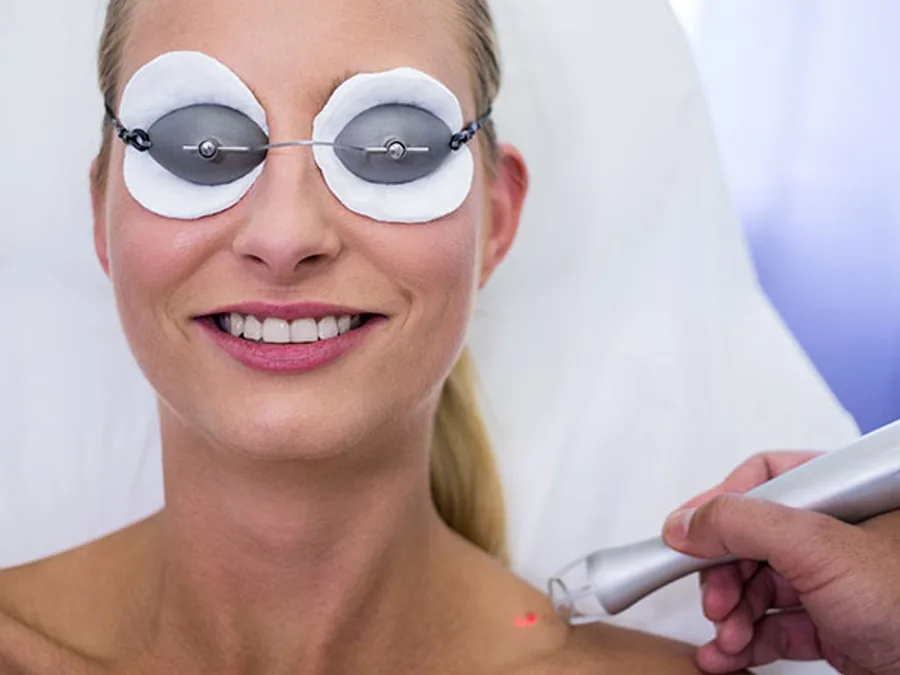
Laser Vein Removal (YAG) closes the vessel from outside the skin instead. The wavelength is absorbed by blood rather than by surrounding tissue, heating the vessel until its wall coagulates and seals. Nothing is injected. That makes the YAG the better tool for facial vessels, where the skin is thin and sensitive and a no-needle approach causes less irritation, and for leg veins so fine that a needle cannot reliably enter them, including the faint red matting that can remain after injection treatment.
The practical division is straightforward. Legs are usually treated with Sclerotherapy first, because it handles feeding vessels of real size that a surface laser cannot reach. Faces are usually treated with Laser Vein Removal (YAG), which is often the better option for facial spider veins around the nose, on the cheeks, and on thin or sensitive skin. Many people end up having both, with the laser cleaning up what the needle is too blunt an instrument for.
Expect the result to arrive slowly. Injected veins bruise, and the treated line often looks darker before it looks better, taking several weeks to fade and sometimes a few months to finish. Compression stockings are worn afterwards for a period we will specify, heat and sun are avoided for a while, and sessions are spaced weeks apart so we can judge what has actually resolved before adding more.
For threadlike red and purple veins on the legs, start with Sclerotherapy and expect a course rather than a single visit. Most legs need two or three sessions, dense ones need more, and clearing most of what you can see is a realistic target while total erasure is not. For the very finest vessels, and for anyone who genuinely cannot tolerate needles, the YAG is the alternative, though it usually takes more passes to cover the same area.
For the face, laser therapy is usually the better choice, because the facial area has many tiny capillaries and laser energy offers a precise, no-needle solution with minimal irritation. Facial vessels linked to rosacea respond well but the underlying rosacea keeps producing new ones, so plan on periodic maintenance rather than a one-time fix, and treat the rosacea itself alongside.
One thing reliably wastes people's money: treating surface veins over and over when the larger veins behind them have never been assessed, because new veins keep appearing when the underlying causes are not addressed. If you have ropey, bulging, palpable varicose veins with aching and swelling, that is a vascular problem before it is a cosmetic one, and we will say so and point you to the right assessment rather than sell you sessions that will not hold.
Understand also what treatment does not do. It clears the veins you have now. It does not change the family history, the hormones, the pregnancies, or the hours on your feet that produced them, so new vessels appear over the years and most people come back for a top-up session periodically. Compression, movement, and elevation genuinely slow that down. A consultation decides which veins are feeding which, whether you need an ultrasound first, and what a full course would actually involve.

Listed in the order we most often recommend them, with a line on when each is the right pick.
Your consultation decides which actually fits your anatomy, your goals, and the downtime you can spare.
Worth reading
Discover what it’s really like to treat spider and varicose veins with sclerotherapy. Is the process painful? Find out more!
Read the answerWorth reading
Visible facial veins can be frustrating and difficult to conceal. Whether they appear around the nose, cheeks, or under the eyes, these small red, blue, or
Read the answerRelated concern
Pockets that diet and exercise will not move
Start from the concernTell us what you would like to change and we will come back with the treatments that fit, honest expectations, and a time to talk it through.
Your details go straight to our Montgomery Road front desk and are never shared. A team member replies during office hours, usually the same day.

Book a consultation at our Montgomery Road office, or call and we will help you decide where to start.
Medically reviewed by Shalini Gupta, MD, Harvard-trained dermatologist and founder of The Dermatology, Laser & Vein Center. Last reviewed September 2026. This page is for education and is not a substitute for a personalized medical consultation.