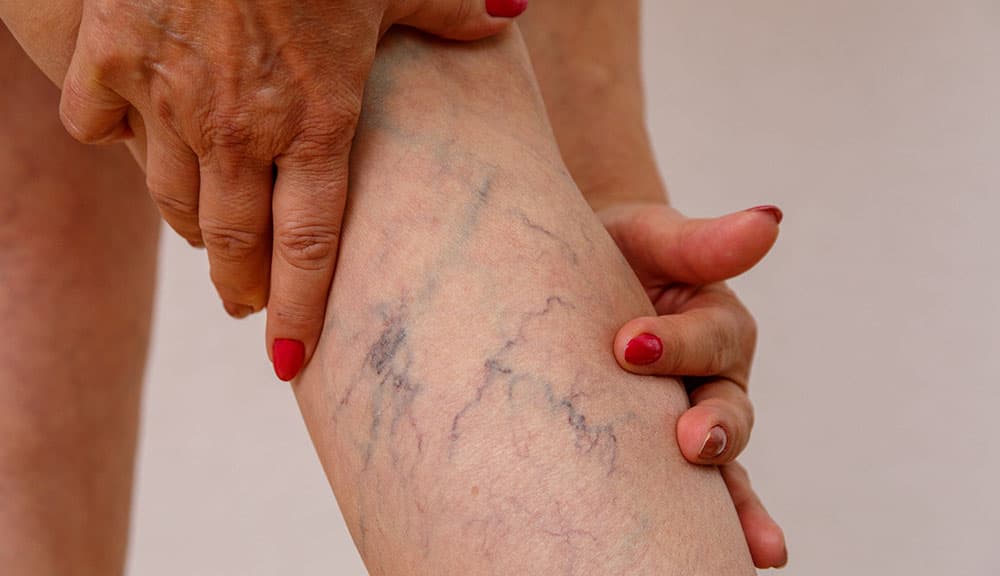
Sclerotherapy
Sclerotherapy is the long-standing standard for treating leg spider veins: a series of tiny injections that cause the unwanted vein to collapse and close, after which your body gradually absorbs it. Your provider locates the feeder vessels and injects those first, mixing local anesthetic into the solution for comfort. Sessions are quick, in-office, and require no time off work.
What issclerotherapy?
Sclerotherapy treats spider veins, reticular veins, and some varicose veins with a sclerosing solution injected through a very fine needle. The solution irritates the vein's lining, causing it to collapse and shut down; over the following weeks your body absorbs the closed vein. It has been in clinical use for over 50 years and is suitable for all skin tones.
Treatment begins by locating and injecting the feeder vessels that supply the visible veins, then works through the smaller vessels. Depending on your case we use hypertonic saline, sotradecol, or Asclera foam sclerotherapy, with local anesthetic mixed into the solution so the injections stay comfortable.
Most veins collapse after the first treatment, and any that persist are retreated. A typical course is two to three sessions per area, spaced every two to three weeks, with fading visible over the following weeks: most treated veins disappear within two weeks to two months.
Who is sclerotherapy for?
Sclerotherapy is for people ready to stop hiding their legs.
Sclerotherapy is not performed during pregnancy; we recommend waiting three to six months after delivery, since some pregnancy-related veins resolve on their own. It is also avoided with a history of leg blood clots or allergy to sclerosant solutions. We review your health history and examine your veins before recommending a plan.
Visible spider or small varicose veins
On the legs most commonly, and sometimes the hands, thighs, ankles, and feet.
Symptoms as well as appearance
Burning, aching, swelling, heaviness, or night cramps in the legs can improve along with how the veins look.
You are in good overall health
Healthy, active adults do best; the treatment is avoided if you are unable to be physically active afterward.
Not pregnant
Treatment waits until three to six months after delivery, and some pregnancy veins fade on their own by then.
You have realistic expectations
Treated veins should not return, but the body can form new ones over time; maintenance sessions are an option down the road.
Where sclerotherapyworks
The legs are by far the most common area, from the thighs down to the ankles. Hand and arm veins can also be treated after vein mapping, and occasionally veins on the face, chest, or back.
Select an area on the figure to see what to expect there.
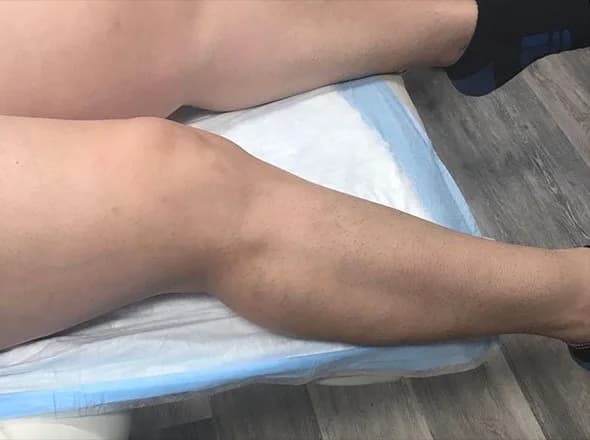
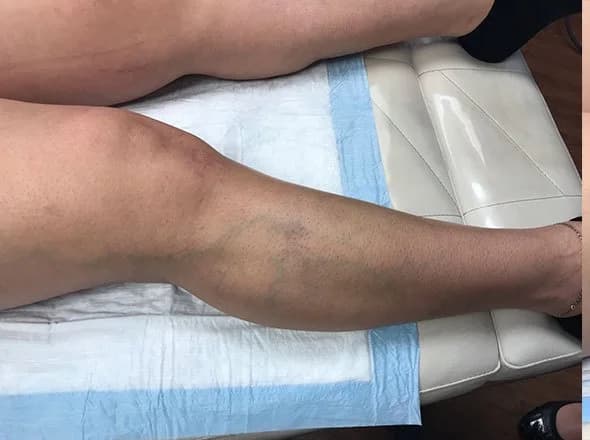
Sclerotherapy, spider veins on the leg
Sclerotherapy,before and after.
Spider veins on the lower leg, faded after treatment. Treated veins clear gradually over several weeks as the body reabsorbs them, and most legs need more than one session to finish. Drag the handle to compare.
See the full galleryIndividual results vary. This photograph is from the treatment gallery on the practice's previous website and is not a guarantee of your own outcome.
How sclerotherapy works
When the valves inside a vein weaken, blood pools, the vein expands, and it pushes closer to the skin surface. That is what makes spider and varicose veins visible, and it is often why the legs ache or feel heavy and tired.
Sclerotherapy injects a sclerosing solution, either hypertonic saline or Asclera foam, through a tiny needle into spider, reticular and some varicose veins. The solution irritates the vein wall as it travels, and the vein collapses and shuts down. The body then absorbs the dying vein. Treating these inefficient veins lets the vascular system work more efficiently, so the appearance improves and so do the symptoms: burning, aching, swelling and night cramps.
Sessions. Treatments are done two to three weeks apart, and any given area typically needs two to three sessions for the best result.
Compression. Support stockings are worn for two to three days after each procedure, sleeping in them the first night only.
Where it is used. Most commonly on the legs and hands, and occasionally on the face, chest or back.
Best time of year. Sclerotherapy can be performed all year, but many patients prefer to wear the compression stockings during the colder months. Since the veins take weeks to months to fully resolve, winter and spring are the ideal months to be ready for summer.
What a session looks like
A typical spider vein session runs from a few minutes to an hour, depending on how many veins are being treated and how complex they are. You lie on an examination table while your provider locates the feeder vessels and injects those first, then moves to the smaller ones. A local anesthetic is mixed into our solution for comfort. Some patients feel cramping and burning during the procedure, which dissipates very quickly.
Some veins almost immediately disappear, but the majority look reddened and swollen. That is followed by a little bruising and sometimes hardening of the vessels. As the vessels die they sometimes appear greenish, until all the blood trapped inside resolves. It typically takes one to four weeks to see the results, and the majority of veins collapse after just the first treatment. The survivors can be retreated until the result is satisfactory.
Avoid NSAID medications such as ibuprofen, Advil and Motrin, along with vitamin E and any herbal supplement that increases bruising. Do not apply lotion to your skin on the day of the procedure. Bring a pair of shorts to wear during the session. If you own 15 to 20 mm Hg compression stockings, bring them; if you do not, we stock a range of sizes and will provide a pair.
For most vessels other than the tiniest spider veins, compression increases both the effectiveness and the safety of the procedure. The stockings keep the treated vessels compressed and help them heal shut, which prevents blood being trapped inside them along with the pain, inflammation and pigmentation that follows. Compression also pushes venous blood out of the leg faster and speeds circulation. Wear them for two to three days, sleeping in them the first night only.
Moderate activity using the legs is encouraged: walking, cycling, hiking, a treadmill or an elliptical. These improve blood flow and speed circulation. Avoid anything that causes venous pooling, including heavy lifting, crunches and any exercise that raises core pressure, along with hot tubs, saunas and extreme heat, all of which dilate the veins.
In expert hands sclerotherapy is remarkably safe. Serious complications such as deep vein clotting or major allergic reactions are rare. Side effects like bruising, tenderness, itching, pigmentation and matting can occur, but are manageable and not serious. Besides the legs looking and feeling better, sclerotherapy improves overall blood flow and the health of the legs, which prevents future problems from vein disease.
Pigmentation develops as trapped blood inside the vessel slowly oxidizes and leaks into the skin. It fades with time. If a faster resolution matters, it can be treated with the Q-switched laser to break the hemoglobin up sooner.
Once treated effectively, the treated veins should not come back. Your body will make new ones over time, at about the same rate as before, so sclerotherapy is an effective treatment rather than a cure for the predisposition. Left untreated, spider and blue veins always get worse over the years, multiplying and branching out, which makes them longer to treat later and raises the chance of side effects.
See sclerotherapy at our office
These are real sclerotherapy sessions filmed at our office, so you can see exactly what the injections look like before you book.
If you would rather talk it through first, a consultation covers your veins, your health history, and your plan.
Whatto expect.
Book a consultationPricing depends on the extent of the veins and the number of sessions your legs need, so we quote it after we examine your legs. CareCredit financing is available.
A session runs from a few minutes to about an hour depending on how many vessels are treated. Sessions are spaced every two to three weeks.
No time off work. Compression stockings are typically worn for the first two to three days, per the instructions you are given for your case, and moderate activity like walking is encouraged.
Most treated veins fade within two weeks to two months, sometimes longer. A typical course is two to three sessions per area.
Frequently asked questions
Does sclerotherapy hurt?
There can be brief cramping or burning during an injection that dissipates quickly, and we mix local anesthetic into the solution for comfort. Mild tenderness can follow for a few hours, and larger vessels may stay tender while the vein dissolves.
Is sclerotherapy safe?
In expert hands it is a remarkably safe procedure. Serious complications such as deep vein clotting or major allergic reactions are rare. Your provider reviews your health history first to confirm you are a good candidate.
What are the possible side effects?
Swelling, redness, tenderness, or itching for hours to days; bruising that fades over weeks; and occasionally brown pigmentation or fine vessel matting. Small skin ulceration and allergic reactions are rare.
What is the brown pigmentation some patients get?
It comes from trapped blood oxidizing in the closing vein. It fades with time, and a Q-switched laser can speed its resolution if needed.
How many sessions will I need?
Typically two to three per area, spaced every two to three weeks. Most veins collapse after the first treatment, and any survivors are retreated.
How long until the veins disappear?
Most treated veins fade within two weeks to two months, sometimes longer. Results appear gradually as your body absorbs the closed vessels.
Do treated veins come back?
Treated veins should not return. The body can form new veins over time, since sclerotherapy does not change the underlying predisposition, and periodic follow-up sessions can address them.
How do I prepare?
Avoid NSAIDs, vitamin E, and supplements that promote bruising beforehand, skip lotions on the day of treatment, and bring shorts. We provide or fit 15-20 mm Hg compression stockings.
What is the aftercare?
Wear your compression stockings for the first two to three days as directed, walk and stay moderately active, and avoid heavy lifting, hot tubs, saunas, and sun on the treated area until any bruising fades.
Can I travel after treatment?
Avoid long immobile trips for at least five days. If you must travel within two weeks, wear compression stockings and move often.
What is the best time of year for treatment?
Any time works, but winter and spring are ideal: stockings are easier to wear in cooler months, and fading takes weeks to months, so legs are clear by summer.
How much does sclerotherapy cost?
Cost depends on the extent of the veins and the number of sessions needed, so we provide a personalized quote at your consultation.
Where to next
Related treatment
Laser Vein Removal (YAG)
Leg veins and facial vessels.
Explore the treatmentRelated concern
Spider & Varicose Veins
Visible leg and facial veins
Start from the concernWorth reading
Sclerotherapy in Action: What It’s Really Like to Treat Spider and Varicose Veins
Discover what it’s really like to treat spider and varicose veins with sclerotherapy. Is the process painful? Find out more!
Read the answerAsk about your skin.
Tell us what you would like to change and we will come back with the treatments that fit, honest expectations, and a time to talk it through.
Your details go straight to our Montgomery Road front desk and are never shared. A team member replies during office hours, usually the same day.

Ready when you are.
Book a consultation at our Montgomery Road office, or call and we will help you decide where to start.
Medically reviewed by Shalini Gupta, MD, Harvard-trained dermatologist and founder of The Dermatology, Laser & Vein Center. Last reviewed September 2026. This page is for education and is not a substitute for a personalized medical consultation.