
Breast Augmentation
Breast augmentation restores or increases volume using silicone or saline implants, sized and placed to suit your frame rather than a number chosen in advance.
What isbreast augmentation?
Breast augmentation, or augmentation mammoplasty, uses an implant to add volume to the breast, improve the balance between the two sides, or restore fullness lost after pregnancy, breastfeeding or weight loss. Surgery is performed here in Cincinnati by Dr. Balvant Arora, MD, MBA, a board certified plastic, reconstructive and cosmetic surgeon.
It is worth being clear about where the line falls, because this practice offers a great deal of non-surgical treatment. Implants and fat transfer are the two options we offer for adding volume to the breast. Treatments that reduce fat elsewhere on the body and injectable work on the face do not change breast volume, and the non-surgical Thermi Breast Lift tightens breast tissue rather than adding volume to it. If the goal is more volume, better symmetry, or a fuller upper pole, an implant or a fat transfer is what we would discuss with you.
Two things are worth knowing before the first consultation. Size is matched to your frame and to the tissue you already have, not to a cup number decided in advance, and an implant chosen for the number rather than the anatomy is one of the most common reasons an augmentation looks artificial. And an implant is a medical device rather than a permanent part of the body. Some patients need a revision, a replacement or a removal at some point in their lives. That is a normal part of having implants, not a sign that something went wrong, and it belongs in the decision from the start.
Who is breast augmentation for?
Breast Augmentation is surgery, so candidacy is decided in person.
Dr. Arora assesses your anatomy, your health, and what the operation can and cannot achieve in your case, including risks and recovery, before anything is scheduled.
Wants more volume
Adults who want more breast volume than their own tissue provides.
Fullness lost over time
People restoring fullness lost after pregnancy, breastfeeding or weight loss.
Uneven breasts
People with a visible difference in size or shape between the two breasts.
Healthy non smokers
Non smokers in good general health who can take real time off to recover.
Understands an implant is a device
People who accept that an implant may need revision or removal at some point.
The right timing
Best considered after childbearing is finished and at a weight you can hold steady, since both change breast volume afterwards.
Where breast augmentationworks
Augmentation works on the breast itself: how much volume sits in it, which plane the implant is placed in, and where the incision is hidden. Implants and fat transfer are the two options we offer for adding volume here, whether the goal is more size, better symmetry or a fuller upper pole.
Placement, incision, implant type and size are all tailored to you as part of one surgical plan agreed at consultation.
Choosing an implant and a size
The practice offers saline and silicone gel implants, including the cohesive gel implants often called gummy bear or form stable implants. Fat transfer is an alternative for patients who want a modest increase rather than an obvious change in size.
Silicone gel. Moves and feels closer to breast tissue and is less prone to visible rippling than saline.
Cohesive gel. Holds a teardrop shape even when you are upright and resists folding and rotation, which is why it suits patients who need shape and structure rather than bulk.
Saline. Remains a reasonable option, and Dr. Arora will explain the trade offs of each against your own anatomy.
Fat transfer. No device is involved. Fat is taken by liposuction from an area such as the abdomen or thighs, purified, and reinjected into the breast, and the area the fat came from is contoured at the same time. It suits a subtle increase, mild asymmetry, or added softness, and it is not a substitute for an implant when a real change in size is the goal.
How the surgery is performed
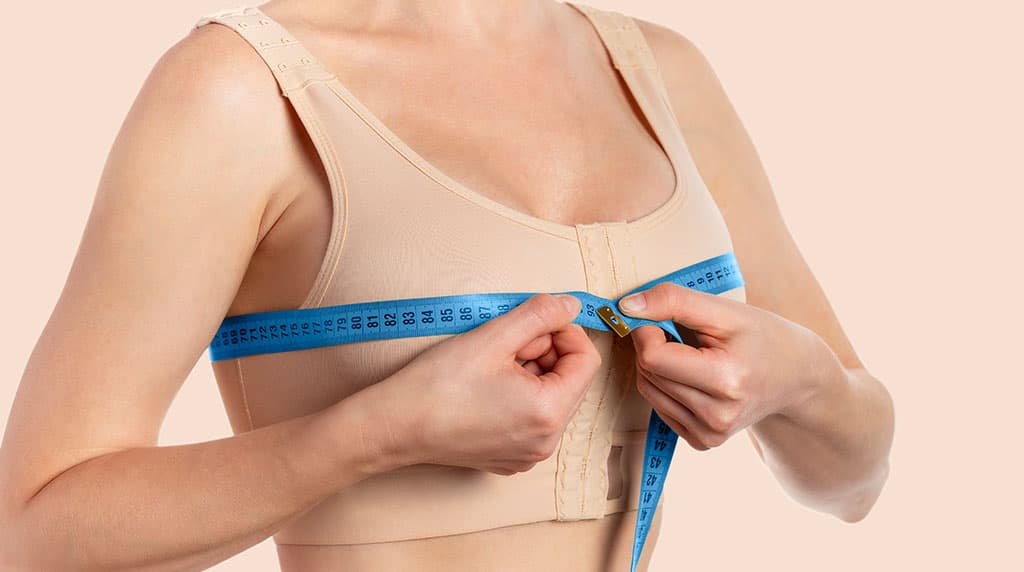
Incisions are placed where they are least conspicuous. Which one Dr. Arora uses depends on your anatomy, the implant chosen, and the plan the two of you agree on at consultation.
In the fold beneath the breast, where the scar sits in an existing crease.
At the border of the areola, one of the discreet locations chosen to keep scarring from showing.
In the armpit, which keeps the breast itself unmarked.
Recovery and results over time
How soon any individual returns to work and to exercise depends on the operation performed and on what your work involves, so ask for your own timeline at consultation rather than working from a general figure.
Swelling, bruising and discomfort in the first days after surgery are expected. Pain medication is prescribed, and you are sent home with written instructions covering activity, support garments and wound care. Follow up appointments are scheduled to check that healing is on track.
The shape you see in the first weeks is not the final one, because swelling from surgery is still resolving. Initial results are visible as the swelling subsides, and Dr. Arora will tell you at your follow up visits how your own healing is progressing.
Over a longer horizon the breast still ages, and it still responds to weight change and to pregnancy; an implant does not hold any of that still. Plan for maintenance visits and for the possibility of further surgery later, and judge the operation on whether it solved the problem you brought in with, not on a single photograph.

Whatto expect.
Book a consultationThere is no single price, because the operation is built around the individual. Implant type, size and profile, the technique and incision used, whether a lift is combined with it, anesthesia and facility fees, follow up visits and garments all move the total, and you receive an itemized estimate at your consultation.
Placement, incision, implant type and size are decided together at consultation, and the length of the operation follows the plan you agree on. Fat transfer adds the liposuction that harvests the fat.
Swelling, bruising and discomfort in the first days are expected, managed with prescribed medication and a support garment. How soon you return to work and to exercise depends on the operation performed and on what your work involves, so ask Dr. Arora for your own timeline rather than working from a general figure.
The shape you see in the first weeks is not the final one, because swelling from surgery is still resolving. Initial results are visible as the swelling subsides, and Dr. Arora will tell you at your follow up visits how your own healing is progressing.
Frequently asked questions
How long does recovery take
Expect swelling, bruising and soreness for the first several days, controlled with prescribed medication and a support garment. The return to desk work, driving and exercise depends on the operation performed and what your daily activity involves, so Dr. Arora gives you a schedule built for your operation rather than an average. Follow up visits are scheduled to confirm you are healing as expected.
Where will the scars be
In the fold under the breast, at the edge of the areola, or in the armpit, depending on the approach chosen for you. All three are selected because they are discreet, and incisions are closed with technique aimed at keeping the mark fine. There will be scars, but with proper care they normally fade significantly over time.
Silicone or saline
Silicone gel feels and moves more like breast tissue and ripples less, which is why it is the more common choice, and cohesive gel versions add shape retention on top of that. Saline is still a sound option and can be right for some patients. The decision depends on how much natural tissue you have to cover the implant, the shape you are after, and your own preference after the differences have been explained.
Do implants need to be replaced
Implants are not lifetime devices. Some patients keep the same implants for a long time without difficulty and others need surgery again because the implant has shifted position or because what they want has changed. There is no way to predict which you will be, so treat future surgery as a real possibility when you decide, and keep up with your follow up appointments.
Can I have a lift at the same time
Sometimes, and for some patients it is necessary. An implant adds volume but it does not raise a breast that sits low, so if the position of the breast is part of what bothers you, an augmentation on its own will not address it. Dr. Arora will tell you plainly at consultation whether a lift needs to be part of the plan.
What does breast augmentation cost
There is no single price, because the operation is built around the individual. Implant type, size and profile, the surgical technique and incision used, whether a lift is combined with it, anesthesia and facility fees, follow up visits and garments all move the total. You receive an itemized estimate at your consultation, and financing through CareCredit is available if you would rather pay in installments than in full up front.
Where to next
Related procedure
Tummy Tuck
Remove excess skin and repair separated muscles.
Explore the procedureRelated treatment
Thermi Breast Lift
Micro-invasive radiofrequency lift for the breasts.
Explore the treatmentRelated procedure
Breast Reduction
Relieve back and neck pain, restore proportion.
Explore the procedureAsk about body contouring.
Tell us the area you have in mind and what you have tried. We will come back with which treatments make sense, what they cost, and when you could start.
Your details go straight to our Montgomery Road front desk and are never shared. A team member replies during office hours, usually the same day.

Ready when you are.
Book a consultation at our Montgomery Road office, or call and we will help you decide where to start.
Surgical procedures reviewed by Dr. Balvant Arora, MD, MBA, board-certified plastic surgeon at The Dermatology, Laser & Vein Center. Last reviewed September 2026. This page is for education and is not a substitute for a surgical consultation. Every operation carries risk, and candidacy is determined in person.