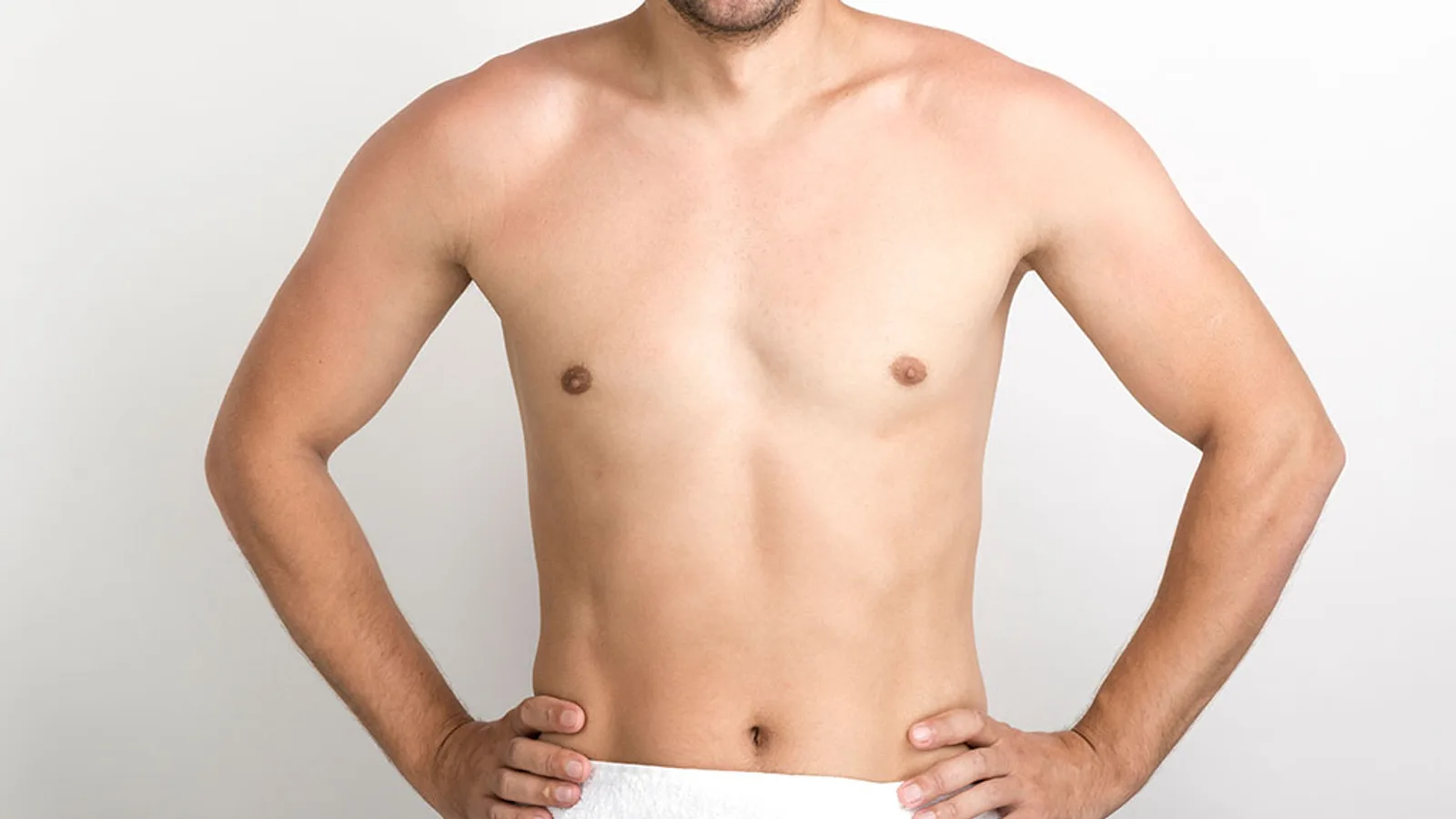
Gynecomastia Surgery
Gynecomastia surgery removes the glandular tissue and fat that create male breast enlargement, a condition that does not respond to training or weight loss because the tissue is not simply fat.
What isgynecomastia surgery?
Gynecomastia is enlargement of the breast tissue in men. It is common, it is not usually dangerous, and its causes have nothing to do with effort or discipline: hormonal shifts at puberty and with age, medications including anabolic steroids and some antidepressants, medical conditions affecting the liver or thyroid, genetics, and excess fat.
The single most useful thing to understand about it is this. What creates the shape is frequently glandular breast tissue rather than fat. Gland is firm and fibrous, it is a different tissue from the fat around it, and it does not shrink with training or with weight loss. Men who lean out everywhere else and still have chest fullness are frequently running into gland. That is a matter of tissue, not of application, and no additional amount of training will change it. Removing the tissue is the only thing that does.
At this practice the operation is done with VASER liposuction, an ultrasound assisted technique that breaks down fat and fibrous tissue before it is removed, with direct excision of the gland added when the gland is prominent. Surgery is performed on an outpatient basis at our Cincinnati practice by a board certified plastic, reconstructive and cosmetic surgeon.
Who is gynecomastia surgery for?
Gynecomastia Surgery is surgery, so candidacy is decided in person.
Dr. Arora assesses your anatomy, your health, and what the operation can and cannot achieve in your case, including risks and recovery, before anything is scheduled.
Fullness that will not shift
Men with chest fullness that has not changed with training or with weight loss.
Firm, fibrous tissue
Men who can feel firm, fibrous tissue in the chest rather than soft fat alone.
Nipple prominence or asymmetry
Men bothered by nipple prominence or a visible difference between the two sides.
Stable weight, good health
Men at a stable weight and in generally good health, with realistic expectations.
Non smokers
Non smokers, or men prepared to stop before and after the procedure.
An underlying cause
Not the right moment if your weight is still coming down. If a medication or hormonal cause is contributing, it is worth raising at consultation, since a cause left unaddressed makes recurrence possible.
Where gynecomastia surgeryworks
The operation addresses the chest itself: the glandular tissue, the fat around it, and the contour the two of them create together. Gland is firm and fibrous, it is a different tissue from the fat around it, and it does not shrink with training or with weight loss.
VASER breaks down fat and fibrous tissue with ultrasound energy before it is removed, and direct excision of the gland is added where the gland is prominent.
How the procedure is performed
The procedure is carried out under local anesthesia with sedation, or under general anesthesia, depending on the complexity of the case and on what you are comfortable with. It typically takes one to two hours and you go home the same day.
Incisions. Small incisions are made in discreet areas of the chest.
Ultrasound. VASER probes break down fat and fibrous tissue with ultrasound energy, which loosens the tissue while sparing the surrounding blood vessels and nerves, and the liquefied fat is suctioned out through a thin cannula.
Excision where the gland is dense. Where the glandular component is prominent, the surgeon adds precise manual excision of the gland, since ultrasound alone will not clear dense tissue.
Closure and compression. Incisions are closed with absorbable sutures and dressed, and a compression garment is fitted to the chest to limit swelling and support the healing contour.
Puffy nipples and asymmetry. The same approach corrects puffy nipple prominence and a visible difference between the two sides.

Recovery and results over time
You will notice a difference almost immediately, but the result keeps refining as swelling resolves, generally over two to three months.
Most patients have mild soreness, swelling and bruising that improves within a few days. Light activity and a return to work are usually possible after two to three days. Strenuous exercise should be held for two to three weeks, and the compression garment is worn for several weeks to control swelling and fluid and to help the contour settle.
The fat and glandular tissue that are removed do not grow back, so results are durable when weight and hormones stay stable. Significant weight gain afterwards can enlarge the fat cells that remain in the chest and elsewhere.
Recurrence is uncommon, but it is possible when the underlying cause is left in place, which is why anabolic steroid use, a medication that is contributing, or a hormonal imbalance is worth raising with us so it can be addressed.
Whatto expect.
Book a consultationIn most cases insurance does not cover gynecomastia surgery, because correction is generally classified as cosmetic, with rare exceptions where it results from a diagnosed medical condition. Check directly with your insurer before you plan around coverage, and ask what documentation they would require.
The procedure typically takes one to two hours and is performed on an outpatient basis, so you go home the same day. It is carried out under local anesthesia with sedation, or under general anesthesia, depending on the complexity of the case and on what you are comfortable with.
Mild soreness, swelling and bruising improve within a few days, and light activity and a return to work are usually possible after two to three days. Strenuous exercise should be held for two to three weeks, and the compression garment is worn for several weeks.
You will notice a difference almost immediately, but the result keeps refining as swelling resolves, generally over two to three months. The fat and glandular tissue removed do not grow back, so results are durable when weight and hormones stay stable.
Frequently asked questions
How soon can I get back to normal activity
Most patients return to work and light activity within two to three days. Strenuous exercise and lifting should wait two to three weeks. The compression garment is worn for several weeks after that, and while the change is visible early, the final contour usually settles over two to three months.
Will there be visible scars
The incisions used are small and placed in discreet areas of the chest, and they are closed with absorbable sutures. Over time they fade and are generally difficult to notice. Smaller incisions are one of the practical advantages of the ultrasound assisted approach, and they mean less scarring and a shorter recovery.
Does the gland always have to be cut out
No. VASER can often break down a small to moderate glandular component on its own. When the gland is dense or prominent, direct excision is added so the correction is complete, Which applies to you is assessed at your consultation, where your condition is evaluated and your medical history reviewed.
Is the result permanent
The fat and glandular tissue removed do not regenerate, so the correction holds provided your weight and hormone levels stay stable. Weight gain can enlarge the fat that remains. In the uncommon cases where gynecomastia recurs, it is usually because an underlying driver such as steroid use or a hormonal imbalance has continued unaddressed.
What anesthesia is used, and will I stay overnight
Either local anesthesia with sedation or general anesthesia, chosen according to how complex your case is and what you are comfortable with. You will not feel pain during the procedure, and discomfort afterwards is generally mild and controlled with medication. The surgery is done on an outpatient basis, so you go home the same day.
Will insurance cover gynecomastia surgery
In most cases no, because correction is generally classified as cosmetic. Rare exceptions exist where the gynecomastia results from a diagnosed medical condition. Check directly with your insurer before you plan around coverage, and ask what documentation they would require.
Where to next
Related procedure
Tummy Tuck
Remove excess skin and repair separated muscles.
Explore the procedureRelated treatment
CoolSculpting Elite
Freeze away fat, no surgery.
Explore the treatmentWorth reading
CoolSculpting Elite for Male Chest Fat: What Men Should Know
Discover how CoolSculpting Elite can reduce male chest fat non-surgically. Learn what men should know about this powerful treatment.
Read the answerAsk about body contouring.
Tell us the area you have in mind and what you have tried. We will come back with which treatments make sense, what they cost, and when you could start.
Your details go straight to our Montgomery Road front desk and are never shared. A team member replies during office hours, usually the same day.

Ready when you are.
Book a consultation at our Montgomery Road office, or call and we will help you decide where to start.
Surgical procedures reviewed by Dr. Balvant Arora, MD, MBA, board-certified plastic surgeon at The Dermatology, Laser & Vein Center. Last reviewed September 2026. This page is for education and is not a substitute for a surgical consultation. Every operation carries risk, and candidacy is determined in person.