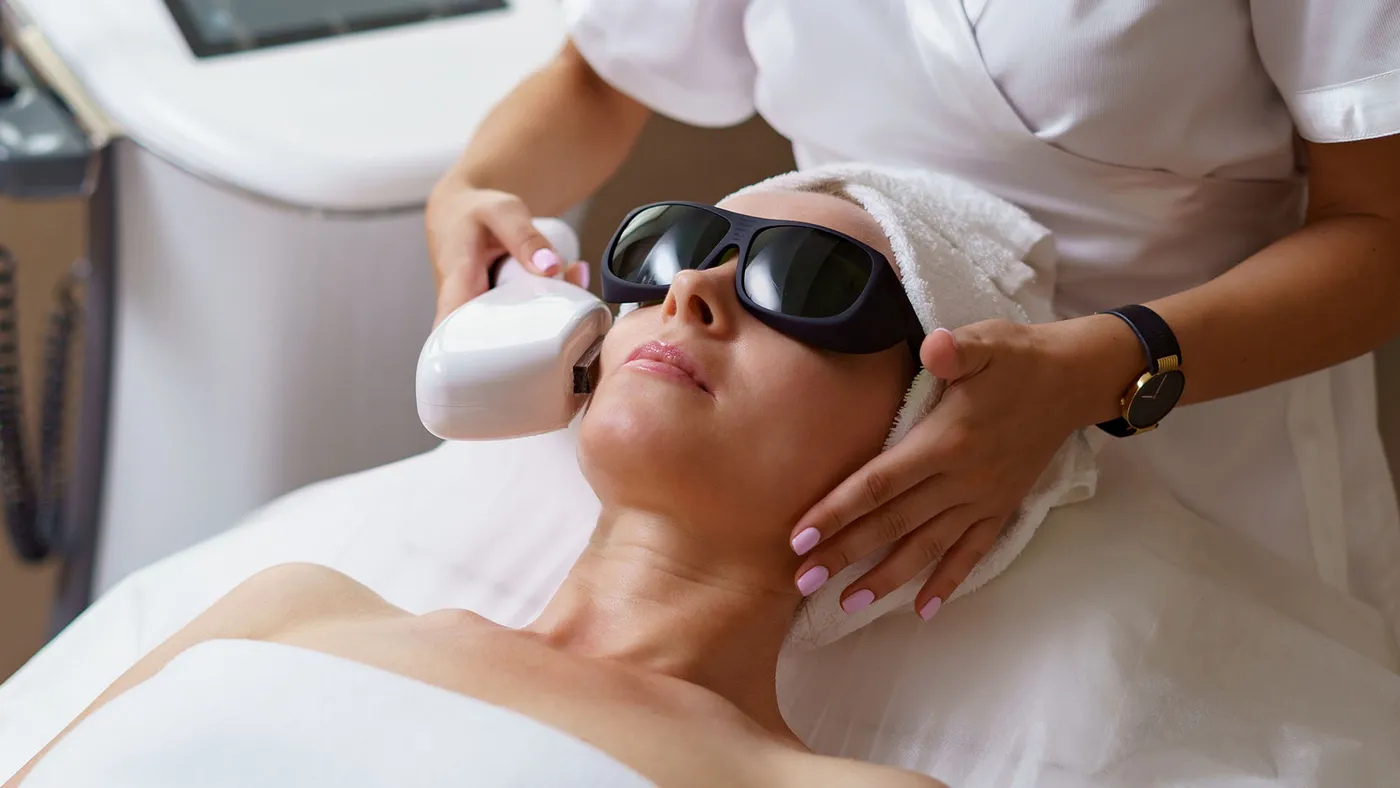
CO2 Laser
The carbon dioxide laser is widely considered one of the gold standards of skin resurfacing and the deepest option we offer. It removes damaged outer skin while driving collagen production deep in the dermis, which is why one session can accomplish what gentler lasers need a series to approach. It asks for real downtime in return, and for the right skin, it is worth every day of it.
What is theCO2 laser?
The CO2 laser works on two levels at once. On the surface, it vaporizes damaged outer layers so fresh skin can take their place. Beneath, its heat remodels the dermis and triggers months of new collagen, so skin comes back not just smoother but firmer and tighter.
We use fractional CO2, which treats microscopic sections of skin while leaving the tissue between them intact. Those untouched bridges allow faster healing, less downtime, and more precise results than the traditional fully ablative CO2 of years past.
Treatments run 30 minutes to 2 hours depending on the area. Comfort is handled with topical numbing or local anesthesia, and sedation is available for deeper treatments. Because the correction is deep, many patients need only a single session, and the results, protected with sunscreen and good skincare, last for years.
Who is the CO2 laser for?
CO2 is for skin that needs more than maintenance: moderate to severe damage that gentler lasers can only nibble at.
Lighter skin tones are often ideal candidates, though advances in fractional technology have widened the range; a consultation settles it honestly. If CO2 is more than your skin needs, we will point you down the ladder to ProFractional or Fraxel instead.
Moderate to severe damage
Deep wrinkles, etched lines, significant scarring, or serious sun damage that has built up over decades.
You want significant change
CO2 is chosen for a visible before-and-after in wrinkles or scars, not a subtle refresh.
You can plan for downtime
Deep treatments need 7 to 14 days of healing. Patients who can schedule around it get the laser's full potential.
You are in good overall health
Healthy healing drives the result, so a medical history review is part of every consultation.
Realistic expectations
About both the result and the recovery. We walk you through exactly what each depth of treatment involves.
Where the CO2laser works
The face is the most common canvas, but CO2 also treats the neck, chest, hands, arms, and abdomen, including precancerous actinic keratosis on sun-exposed skin.
Select an area on the figure to see what CO2 does there.
See CO2 results discussed
A video on treating stubborn dark spots and hyperpigmentation, one of the concerns where resurfacing earns its keep.
If you would rather talk it through, a consultation covers everything you see here, for your skin.
Whatto expect.
Book a consultationCost depends on the area treated and the depth of resurfacing planned, so you receive a personalized quote at your consultation.
Smaller areas finish quickly; full-face resurfacing takes longer. Topical or local anesthesia keeps you comfortable, with sedation available for deeper treatments.
Mild treatments settle in 3 to 5 days, moderate in 5 to 7, and deep resurfacing in 7 to 14. Redness, swelling, and peeling are part of normal healing.
Fresh skin appears as healing completes, then keeps improving for 3 to 6 months as collagen rebuilds. With sunscreen and good skincare, results last for years.
Frequently asked questions
Is CO2 laser treatment painful?
Discomfort is minimal thanks to numbing techniques: topical or local anesthesia for most treatments, and sedation for deeper resurfacing.
How long do the results last?
Several years with good skincare and consistent sun protection. That durability is a large part of why CO2 is counted among the gold standards of resurfacing.
Is there any risk involved?
As with any advanced treatment there are risks, including redness, swelling, and temporary pigmentation changes. Treatment by an experienced provider substantially reduces them.
Can CO2 laser be combined with other treatments?
Yes, it is often paired with Botox, dermal fillers, or skin tightening treatments for comprehensive rejuvenation.
When can I wear makeup again?
Usually within 5 to 7 days, once the new skin has surfaced and your provider clears it.
How many sessions will I need?
Many patients need just one, especially with more aggressive settings. A series of lighter treatments is an option for those who prefer to trade intensity for shorter recoveries.
How is CO2 different from Fraxel or ProFractional?
CO2 is the deepest of the three. Fraxel is non-ablative and gentler, working on texture and pigment over a series with days of downtime. CO2 trades the longest recovery for the largest single-session change.
What does the CO2 laser treat?
Fine lines and deep wrinkles, acne and surgical scars, sun damage and age spots, uneven tone and texture, enlarged pores, crepey or lax skin, stretch marks, and precancerous actinic keratosis.
Is CO2 safe for my skin tone?
Lighter skin tones are often ideal, though modern fractional technology has widened the range. For deeper skin tones we usually recommend Venus Viva or another pigment-safe option, decided at your consultation.
What is recovery actually like?
Expect redness and swelling like a strong sunburn, then peeling as fresh skin surfaces. Mild treatments settle in 3 to 5 days; the deepest take up to two weeks. We send you home with a clear aftercare plan.
Ask about your skin.
Tell us what you would like to change and we will come back with the treatments that fit, honest expectations, and a time to talk it through.
Your details go straight to our Montgomery Road front desk and are never shared. A team member replies during office hours, usually the same day.

Ready when you are.
Book a consultation at our Montgomery Road office, or call and we will help you decide where to start.
Medically reviewed by Shalini Gupta, MD, Harvard-trained dermatologist and founder of The Dermatology, Laser & Vein Center. Last reviewed September 2026. This page is for education and is not a substitute for a personalized medical consultation.