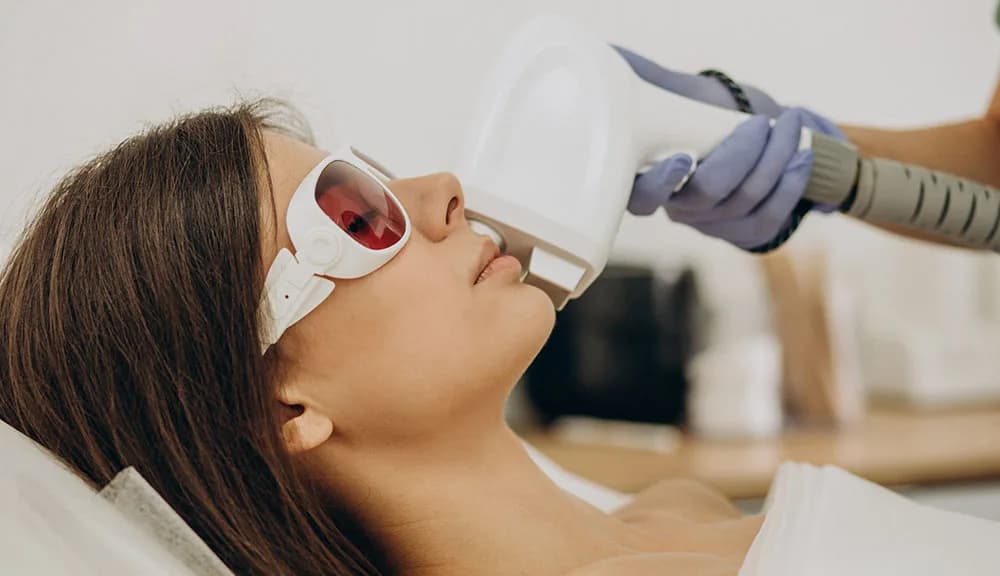
Laser Skin Resurfacing
Laser skin resurfacing uses concentrated light to lift away damaged outer skin while waking up collagen in the layers beneath. It treats fine lines, scars, sun damage, and uneven texture. Because we run several laser platforms under one roof, the treatment is matched to your skin and your calendar, not the other way around.
What is laserskin resurfacing?
Resurfacing lasers work in two directions at once. On the surface, the light removes or remodels damaged skin so that fresher, smoother skin takes its place. Deeper down, the controlled heat signals your skin to build new collagen, which keeps improving tone and firmness for months after the treatment itself.
The real decision is not whether to resurface but how deep to go, and how much downtime to trade for it. At the top of the ladder sits the CO2 laser, the deepest option for etched wrinkles, scars, and serious sun damage, with a week or two of recovery. In the middle, ProFractional resurfaces in tiny fractional channels for dramatic change with only days of downtime. On the gentler rungs, Fraxel handles texture and pigment without removing skin at all, and Clear + Brilliant keeps young skin ahead of aging with essentially no recovery.
Some concerns call for something other than a resurfacing laser entirely: Pico laser for stubborn pigment, or radio frequency resurfacing with Venus Viva for deeper skin tones. That is the advantage of a practice with the full toolkit: at your consultation we recommend the device that fits your skin, not the one device a practice happens to own.
Who is laser resurfacing for?
There is a resurfacing depth for almost every decade of skin; the skill is choosing the right one.
Some situations call for waiting or for a different tool: active skin conditions, a recent tan, pregnancy or breastfeeding, a tendency to keloid scarring, and certain medications all change the plan. We screen for every one of these at your consultation and offer alternatives such as chemical peels when a laser is not the right answer.
In your 20s or 30s
Preventative resurfacing for early acne scars, enlarged pores, and texture, usually with the gentlest devices.
In your 40s or 50s
Corrective work on fine lines, early laxity, and discoloration, where fractional lasers do their best work.
60s and beyond
Restorative resurfacing for deep wrinkles, age spots, and lost elasticity, where deeper treatments earn their downtime.
Sun damage at any age
Pigment, rough patches, and dullness respond well across the whole ladder of devices.
Realistic about recovery
Deeper results ask for more healing time. We are honest about the trade so you can plan around it.
Where resurfacingworks
The face is the classic canvas, but resurfacing lasers also treat the neck, chest, and hands, the places that show sun and age first.
Select an area on the figure to see what resurfacing does there.
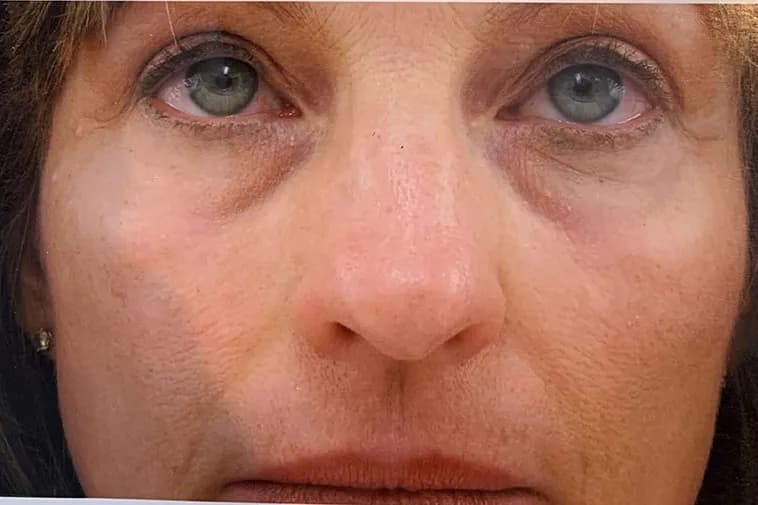
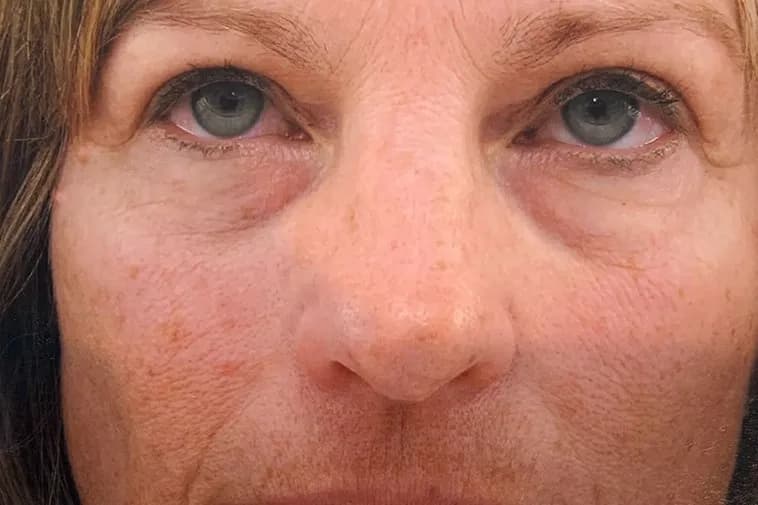
Laser skin resurfacing, mid face
Resurfacing, beforeand after.
Fine lines and crepey texture through the mid face, smoothed by resurfacing. Which device does the work, and how deep it goes, is the decision this page exists to help you make. Drag the handle to compare.
See all resurfacing resultsIndividual results vary. This photograph is from the treatment gallery on the practice's previous website and is not a guarantee of your own outcome.
See resurfacing at our office
A short look at laser resurfacing as we actually perform it in our Montgomery Road office. Each device page has more, including patient testimonials and full consultation walkthroughs.
If you would rather talk it through, a consultation covers the whole ladder, for your skin.
Whatto expect.
Book a consultationCost depends on which laser is right for you and the size of the area treated. You receive a personalized estimate at your consultation.
Lighter treatments finish inside an hour; deeper resurfacing can take up to two hours depending on the laser used and the area treated.
The ladder in one line: CO2 needs 7 to 14 days, erbium 3 to 7, fractional treatments 2 to 4, and Clear + Brilliant or light-based treatments essentially none.
Ablative resurfacing typically holds for 3 to 5 years or more; non-ablative results last 6 to 12 months and are refreshed with touch-up sessions.
Frequently asked questions
Is laser skin resurfacing safe?
Yes, when performed by trained professionals. Every treatment here is customized to your skin type and concern to minimize risk, and we screen for the conditions that would make resurfacing unwise.
How many sessions will I need?
It depends on the laser and the concern. Deep CO2 treatments often need just one session; Fraxel is typically a series of 3 to 5, ProFractional 2 to 4, and Pico 2 to 4 for pigment.
Does laser resurfacing hurt?
Discomfort is minimal for most patients. We use topical numbing creams and cooling devices, and deeper treatments can be done with local anesthesia.
How much does laser resurfacing cost in Cincinnati?
It varies by laser and by the area treated, so we give you an estimate at your consultation once the right device is chosen.
Can all skin types undergo laser resurfacing?
Many lasers suit a wide range of skin types, though some are better for lighter tones. Deeper skin tones often do best with Venus Viva, a radio frequency treatment that does not rely on pigment. The match is made at your consultation.
Are the results permanent?
Results are long lasting but not permanent, because skin keeps aging. Ablative results typically hold 3 to 5 years or more; non-ablative results 6 to 12 months. Sunscreen and maintenance sessions extend both.
Which laser is right for me?
The honest answer comes from an exam. As a rule of thumb: CO2 for the deepest wrinkles and scars, ProFractional for significant change with days of downtime, Fraxel for texture and pigment without removing skin, and Clear + Brilliant for prevention and glow.
Can laser resurfacing treat acne scars?
Yes. Acne scarring is one of the concerns resurfacing addresses best. Fractional lasers rebuild smoother texture over a short series, and deeper scars can be treated with CO2 or ProFractional.
What is the best age to start?
There is no single best age. Patients in their 20s and 30s resurface preventatively for scars and pores, the 40s and 50s correct lines and discoloration, and 60s and beyond restore deeper wrinkles and elasticity.
Where to next
Related treatment
CO2 Laser Resurfacing
Deep resurfacing for lines and scars.
Explore the treatmentRelated concern
Acne Scars
Pitted texture left behind after breakouts
Start from the concernWorth reading
Is Venus Viva Better than Laser? An In-Depth Look at Skin Resurfacing Technology
Venus Viva uses NanoFractional radiofrequency rather than light, so it differs from laser resurfacing. Compare both for wrinkles, scars, pores and rosacea.
Read the answerAsk about your skin.
Tell us what you would like to change and we will come back with the treatments that fit, honest expectations, and a time to talk it through.
Your details go straight to our Montgomery Road front desk and are never shared. A team member replies during office hours, usually the same day.
Ready when you are.
Book a consultation at our Montgomery Road office, or call and we will help you decide where to start.
Medically reviewed by Shalini Gupta, MD, Harvard-trained dermatologist and founder of The Dermatology, Laser & Vein Center. Last reviewed September 2026. This page is for education and is not a substitute for a personalized medical consultation.