
Eyelid Surgery
Blepharoplasty removes the excess skin that hoods the upper lid and the fat that bags the lower one. When hooding is severe enough to obstruct vision, no energy device reaches it and surgery is the honest answer.
What iseyelid surgery?
Eyelid surgery, or blepharoplasty, removes excess skin and removes or repositions fat around the eye. It can be done on the upper lids, the lower lids, or both. At The Dermatology, Laser & Vein Center in Cincinnati, Ohio, eyelid surgery is performed by Dr. Balvant Arora, a board-certified plastic surgeon, who evaluates your facial anatomy and builds a personalized plan around your goals.
The upper lid and the lower lid are usually two different problems. The upper lid is generally a skin problem: as the skin loses elasticity it hoods down over the crease, and when it is heavy enough it can interfere with peripheral vision. At that point the operation is partly functional rather than purely cosmetic. The lower lid is generally a fat problem: the pads beneath the eye push forward and read as bags, often with loose or crepey skin lying over them.
That distinction matters because this practice offers a great deal of non-surgical treatment around the eyes, and those treatments do not all do the same thing. Focused ultrasound, radiofrequency microneedling and laser resurfacing work on skin quality and mild laxity. None of them removes tissue. Once there is genuine excess skin folding over the lid, or a fat pad that stands out in every light, no energy device and no neurotoxin reaches it, and surgery is the honest answer. The reverse is also true. Some of what gets described as a lid problem is actually a brow problem or a volume problem, and those are better treated without an operation.
Who is eyelid surgery for?
Eyelid Surgery is surgery, so candidacy is decided in person.
Dr. Arora assesses your anatomy, your health, and what the operation can and cannot achieve in your case, including risks and recovery, before anything is scheduled.
Hooded upper lids
Excess upper eyelid skin droops down over the eyelid crease.
Vision blocked by skin
The upper lid skin is heavy enough to interfere with your peripheral vision.
Under-eye bags
Fat pads beneath the eye stay puffy regardless of how well rested you are.
Healthy, with time to heal
In generally good health, and able to give recovery seven to ten days.
Looking for rested
You want to look rested rather than to look like a different person.
Not a brow or hollow problem
A dropped brow, a hollow tear trough or fine lines alone are treated without surgery.
Where eyelid surgeryworks
Eyelid surgery works at the eye and nowhere else. The upper lid and the lower lid are usually two different problems: the upper lid is generally a skin problem, and the lower lid is generally a fat problem.
The brow is on this map for the opposite reason. A brow that has dropped reads as hooding but is not a lid problem, and removing lid skin does not fix it. Sorting out which of them is actually driving the look is the point of the consultation.
Upper lid surgery and lower lid surgery
Many patients have both lids treated in the same operation, and eyelid surgery is often planned alongside other facial work. Your lids, your brow position and your skin are assessed as one unit at the consultation, because treating any of them in isolation can leave the other two doing the same thing they were doing before.
The incision is made in the natural crease of the lid, the excess skin is removed, and a small amount of fat or a strip of muscle is taken when the lid calls for it. Because the incision sits inside the fold, the line is hidden by the lid itself once it has healed. The visible change is that the crease reappears and the eye looks open rather than shaded. Where upper lid skin had been blocking part of the peripheral field, removing it may improve the field of vision.
Lower lid surgery addresses the bags rather than a hood. Fat is removed or repositioned so the step between the lid and the cheek flattens out, and loose skin is tightened where there is enough of it to matter. The aim is a rested lower lid, not a different-looking eye, so the shape and the expression should be recognizably yours afterward.
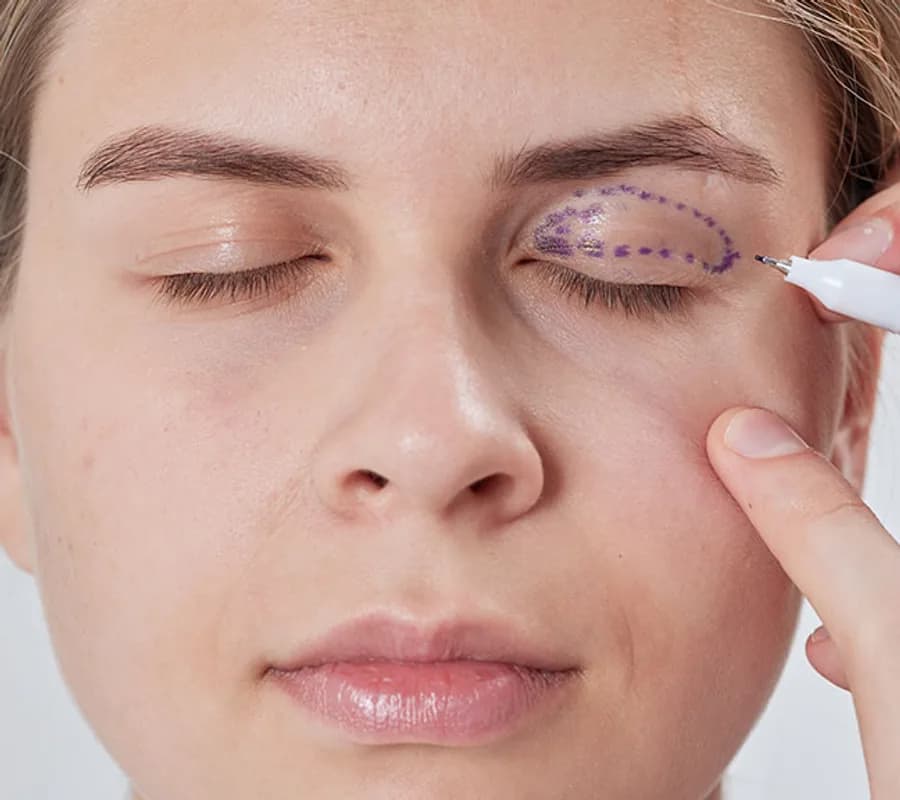
When the lid is not the real problem
Three separate things get mistaken for a lid problem. Getting the diagnosis right is the point of the consultation, because the wrong choice here does not fail loudly. It simply does not do very much.
A brow that has dropped pushes the whole upper lid down and reads as hooding. Where the brow is the driver, lifting it is what addresses the cause, whether with a neuromodulator such as Botox or Daxxify placed to open the eye.
Hollowness under the eye is a different problem again. A deep tear trough casts a shadow that looks like tiredness but is not a bag, and surgery removes tissue rather than adding it. The practice treats that area non-surgically with fillers made for the tear trough, such as Restylane or Belotero. If the complaint is a shadow rather than a bulge, filler is the more direct answer.
Fine lines and crepey texture around the eye respond to fractional CO2 or Erbium laser resurfacing, radiofrequency microneedling and focused ultrasound, all of which work on the skin and mild laxity rather than on excess. These can be used before surgery, instead of surgery, or after it to improve the skin around a lid that has already been corrected.
The procedure, recovery and what lasts
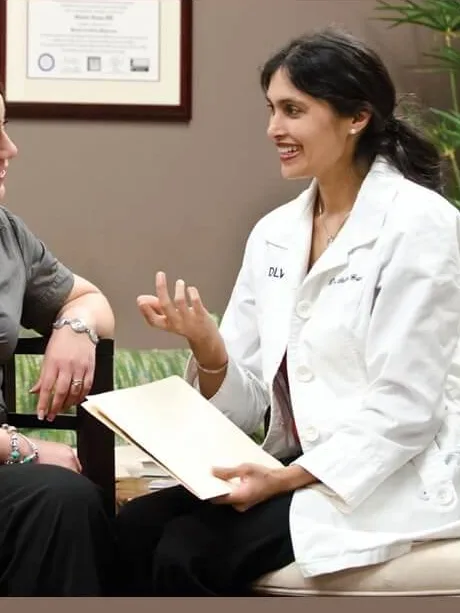
Eyelid surgery is an outpatient procedure. It is performed under local anesthesia with sedation or under general anesthesia depending on the plan, and it usually takes one to two hours, depending on whether the upper lids, the lower lids or both are being treated. You will be given instructions beforehand covering medications, skincare and how to prepare.
Expect mild swelling and bruising around the eyes, some sensitivity to light, and a feeling of tightness in the lids during the first week. Cold compresses and the medication you are given help with both the swelling and the discomfort, which most patients describe as mild. Most people are back to normal activities within seven to ten days, though some swelling can linger for several weeks and the lids continue to settle after that.
Because the incisions sit in the natural creases, the scars are usually discreet once healed and typically fade and become less noticeable over time. Results last many years, which makes eyelid surgery one of the longer-lasting facial procedures. The skin that was removed does not come back, but aging continues around it, which is why skin care and the non-surgical treatments above still have a role after surgery.
Eyelid Surgery at our office
Filmed at the Montgomery Road office. Seeing the procedure explained and performed answers questions a written page cannot.
Whatto expect.
Book a consultationEyelid surgery is quoted after your consultation, since treating the upper lids, the lower lids or both is a different operation each time. You will have the figure before you commit to anything.
An outpatient procedure that usually takes one to two hours, depending on whether the upper lids, the lower lids or both are treated. It is performed under local anesthesia with sedation or under general anesthesia, depending on the plan.
Most people are back to normal activities within seven to ten days, with swelling and bruising heaviest in the first week. Some swelling can linger for several weeks while the lids settle.
The skin and fat that were removed do not come back, which makes this one of the longer-lasting facial procedures. Aging continues around the eye, so skin care and non-surgical treatment still have a role afterward.
Frequently asked questions
How long does eyelid surgery take?
Most procedures take one to two hours, depending on whether the upper lids, the lower lids or both are treated. It is done on an outpatient basis under local anesthesia with sedation, or under general anesthesia, depending on the plan agreed at your consultation.
How long is the recovery?
Most patients return to normal activities within seven to ten days. Swelling and bruising are heaviest in the first week and improve steadily after that, though mild swelling can persist for several weeks. Discomfort is usually mild and managed with cold compresses and prescribed medication.
Will the scars be visible?
Incisions are placed in the natural creases of the eyelid, so the line is concealed by the fold of the lid once it has healed. Scars typically fade and become less noticeable over time. Every incision leaves a mark, so your surgeon will review the benefits, the potential risks and what to expect from healing with you before you decide.
Can eyelid surgery improve vision?
It can, when the reason for the loss is upper lid skin blocking part of the visual field. Removing that skin may improve the field of vision it was covering. It is worth establishing at the consultation what is actually causing the change.
How long do the results last?
Results last many years and eyelid surgery is one of the more durable facial procedures. The skin and fat that were removed do not return. Natural aging continues around the eye, so the area will keep changing over time.
Can eyelid surgery be combined with other treatments?
Yes, and it often is. Patients commonly pair it with laser skin resurfacing, neuromodulators such as Botox or Daxxify, or tear trough filler, because each of those addresses something surgery does not. Eyelid surgery is also frequently planned alongside other facial surgery.
Where to next
Ask about body contouring.
Tell us the area you have in mind and what you have tried. We will come back with which treatments make sense, what they cost, and when you could start.
Your details go straight to our Montgomery Road front desk and are never shared. A team member replies during office hours, usually the same day.

Ready when you are.
Book a consultation at our Montgomery Road office, or call and we will help you decide where to start.
Surgical procedures reviewed by Dr. Balvant Arora, MD, MBA, board-certified plastic surgeon at The Dermatology, Laser & Vein Center. Last reviewed September 2026. This page is for education and is not a substitute for a surgical consultation. Every operation carries risk, and candidacy is determined in person.