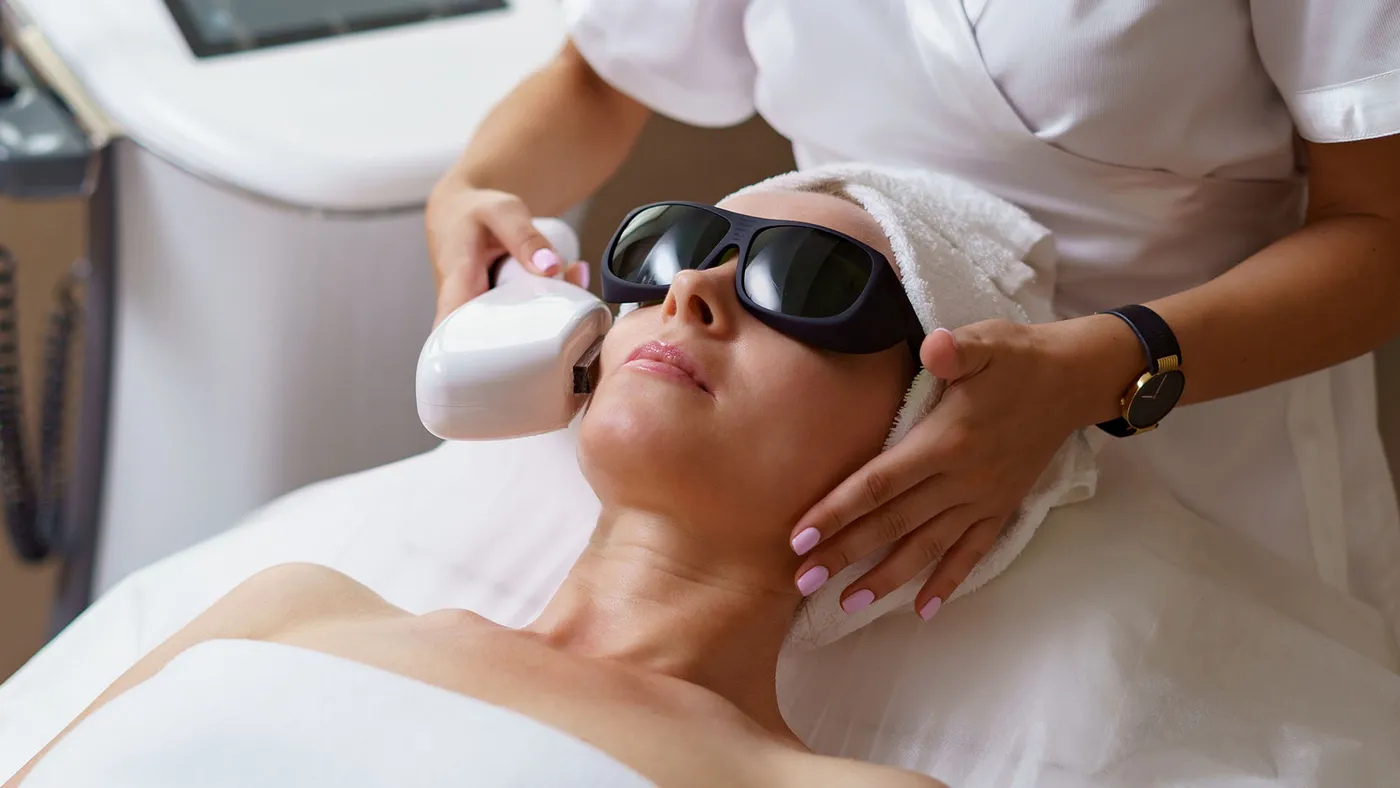
Laser Acne Treatments
Acne is the most common skin condition in the country, and no single treatment fits every case. As a physician-led dermatology practice, we treat acne medically: lasers, light therapy, peels, and prescription-strength skincare, matched to your breakouts by our physician-led team.
Why acnehappens
Every breakout starts the same way. Overactive sebaceous glands produce too much sebum, dead skin cells stick together instead of shedding, and pores clog. Bacteria build up inside the blocked pore, the skin around it inflames, and the result is everything from blackheads to painful cysts and nodules. Severe acne can scar permanently, and the toll is more than physical; it wears on self-esteem too.
Because the causes stack, the fix is rarely one product. We combine in-office procedures with the right at-home routine. For many patients that starts with AviClear, the FDA-cleared laser that quiets the oil glands themselves, and we were the first practice in Cincinnati to offer it. Photodynamic therapy uses light-activated medication to clear stubborn, inflamed acne.
Gentler resurfacing rounds out the menu: chemical peels unclog pores and fade post-acne marks, and microdermabrasion sweeps away the dead-cell layer where clogs begin. For severe cases, oral medication is part of the conversation, and if acne has already scarred, we plan scar treatment alongside clearance.
Who is acne treatment for?
Anyone whose breakouts keep winning against the drugstore shelf.
A consultation is a medical visit, not a sales pitch. Your provider examines your skin, asks about what you have already tried, and builds a plan, whether that is a single treatment, a series, or simply better skincare.
Your acne keeps coming back
Recurring breakouts that over-the-counter washes and spot treatments never fully clear.
Your acne is severe or cystic
Deep, painful cysts and nodules deserve medical treatment early, before they scar.
You are an adult with acne
Acne can develop at any stage of life. Adult and hormonal patterns respond to the same medical toolkit.
You are a teenager
Teenage acne is the most common kind, and treating it well protects both skin and confidence.
You have post-acne scars or marks
Once skin is clear, peels, resurfacing, and other scar treatments can soften what past breakouts left behind.
Where acneshows up
Acne follows oil. The face takes most of it, but severe acne also appears on the neck, shoulders, chest, and back, and every area can be treated.
Select an area to see how we approach it.
Whatto expect.
Book a consultationCost depends entirely on which treatments your plan calls for, so we quote it after your skin has been examined. CareCredit financing is available.
Sessions run from a few minutes for a light chemical peel to about 30 minutes for an AviClear laser treatment, while photodynamic therapy can take up to three hours so the solution fully absorbs.
Most acne treatments let you return to your day immediately. Anything with real recovery time is discussed before you commit.
Acne clears in stages: existing breakouts settle first, then new ones become fewer and milder as the plan does its work. Maintenance keeps skin clear.
Frequently asked questions
What causes acne?
Overactive oil glands produce excess sebum, dead skin cells clump and clog pores, and bacteria build up inside the blockage, inflaming the skin. Severe cases form cysts and nodules that can scar.
Can adults get acne?
Yes. Acne is most common in teenagers, but it can develop or persist at any stage of life, often in a hormonal pattern along the jawline and chin. Adult acne responds well to medical treatment.
What acne treatments do you offer?
Laser treatments including AviClear, photodynamic therapy, chemical peels, microdermabrasion, Thermage, and medical-grade skincare, with oral medication for severe cases. Your plan combines what your skin actually needs.
What is the best treatment for severe or cystic acne?
Severe acne deserves a medical plan. Options range from the AviClear laser, which quiets the oil glands at the source, to photodynamic therapy and prescription medication. We build the plan after examining your skin.
Can acne scars be treated?
Yes. Chemical peels, microdermabrasion, filler agents, ProFractional laser therapy, laser skin resurfacing, and Thermage can all soften acne scarring. We treat active acne first, then repair.
Do I need a prescription for treatment?
Not necessarily. Many of our treatments are drug-free procedures. When prescriptions help, we can write them, and we carry medical-grade cleansers, toners, moisturizers, and sunscreens to support your results at home.
How long does acne treatment take to work?
It depends on the severity and the plan. Some treatments calm breakouts within weeks; laser programs build results over two to three months. We set honest expectations at your consultation.
Why see a dermatologist instead of an aesthetician?
Acne is a medical condition. A dermatologist can analyze the type of acne you have, identify your skin type, choose among topical medications, oral medications, and aesthetic treatments accordingly, and manage scarring, all under one roof.
Where to next
Related treatment
AviClear Acne Treatment
Laser acne treatment, no drugs.
Explore the treatmentRelated concern
Acne
Active breakouts that topicals have not fixed
Start from the concernWorth reading
How Long Does Acne Treatment Take?
We specialize in providing top-notch acne treatments that go beyond the surface, empowering you to embrace a clear and confident complexion.
Read the answerAsk about your skin.
Tell us what you would like to change and we will come back with the treatments that fit, honest expectations, and a time to talk it through.
Your details go straight to our Montgomery Road front desk and are never shared. A team member replies during office hours, usually the same day.

Ready when you are.
Book a consultation at our Montgomery Road office, or call and we will help you decide where to start.
Medically reviewed by Shalini Gupta, MD, Harvard-trained dermatologist and founder of The Dermatology, Laser & Vein Center. Last reviewed September 2026. This page is for education and is not a substitute for a personalized medical consultation.